
Heat Pumps for Pools
A swimming pool heat pump is the most efficient way to heat an outdoor pool. It takes free heat from the air and moves it into your water, giving you around 5 to 7 kW of heat for every 1 kW of electricity in typical UK spring and summer weather. Choose from full inverter heat pumps, including the new Orilux AXS and Orilux XP R290, through to great-value on/off models. Not sure what size you need? Try our heat pump calculator or ask our tech team.
Technical equipment requires professional installation. We work with over 1,000 trade installers and can arrange for one to fit your heat pump, so just get in touch. See our terms and conditions for details.


 Calorex I-PAC 1ph Side Outlet Inverter Heat Pumps - summer season
Savings up to 29%
Starting at £1,924.80


What is a swimming pool heat pump?
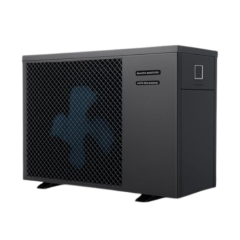
A pool heat pump (sometimes called an air source heat pump) works like a fridge in reverse. A fan draws outside air over a coil filled with refrigerant, which soaks up the heat in the air, even on a cool day. A compressor concentrates that heat and passes it to your pool water through a heat exchanger. Because it's moving heat rather than making it, a heat pump gives you several times more heat than the electricity it uses. That's why it costs far less to run than an electric heater or a gas or oil boiler.
The Benefits of a Swimming Pool Heat Pump:
- - Reduced heating and running costs
- - Reduced carbon footprint
- - Increased cost-effectiveness
- - Durability and longevity
- - Sustainable heating option
Inverter or on/off: which should you choose?
An on/off heat pump runs at full power until the pool is warm, switches off, then starts again when the temperature drops. It costs less to buy and does the job well on smaller pools and summer-only use.
An inverter heat pump speeds up and slows down to match what your pool needs. Once the water is warm, it drops to low power and ticks over. That's when it's at its most efficient, and it's also much quieter. For most pools an inverter pays back the extra cost in lower bills. Our guide to inverter vs standard heat pumps explains the difference in more detail.
Our heat pump ranges
- Orilux AXS: full inverter with a Mitsubishi compressor, heats down to -10°C and has a 10 year compressor warranty. Five sizes from 12.6 kW to 24.4 kW.
- Orilux XP R290: premium inverter running on natural R290 refrigerant (GWP 0.02). Heats down to -20°C, with Turbo mode up to 130%. 21.7 kW and 26.6 kW.
- Aqua Inverter Turbo-Pro Silence: a popular, quiet full inverter heat pump.
- InverX20: strong low-temperature performance, heating down to -20°C.
- Inverter Comfortline: great-value inverter heat pumps from 7 kW to 24 kW.
- Calorex / Dantherm I-PAC: British-built inverter heat pumps for summer-season and year-round use.
- Above ground pool heat pumps: compact heat pumps that plug into smaller pool systems.
What size heat pump do I need?
Size matters. A heat pump that's too small will struggle to get your pool warm in spring and autumn. Each heat pump lists a recommended pool volume, but those figures usually assume the pool is covered, so go up a size if yours isn't, or if you want a long season. Our heat pump sizing guide and heat pump calculator will point you in the right direction, or call our tech team for free advice.
Get more from your heat pump
The biggest saving you can make costs very little. Most of a pool's heat escapes from the surface, so a solar pool cover will hold the heat in and cut your running costs dramatically. Add a bypass kit to control the flow through the heat pump, a heat pump cover for the winter, and a variable speed pool pump for a fully efficient system. For more on running costs, read our guide to swimming pool heat pump costs.
Pool heat pump FAQs
How much does it cost to run a pool heat pump?
It depends on your pool size, the weather, the temperature you want and, above all, whether you use a cover. As a rough guide, a modern inverter heat pump gives you 5 to 7 kW of heat for each 1 kW of electricity in mild weather, and more once the pool is up to temperature and the unit is running at low power. Our heat pump costs guide goes into more detail.
How long does a heat pump take to heat a pool?
A correctly sized heat pump will typically raise the water by 1°C to 2°C a day. Running it during the warmest part of the day and keeping the pool covered will get you there faster.
Do heat pumps work in cold weather?
Yes, though they produce less heat as the air gets colder. The Orilux AXS heats down to -10°C, and the Orilux XP and InverX20 heat down to -20°C.
Can I use a heat pump with a salt water pool?
Yes, as long as it has a titanium heat exchanger, which all of our main ranges do.
Can I fit a heat pump myself?
A heat pump needs plumbing into your filtration system and a dedicated electrical supply fitted by a qualified electrician. We can arrange for one of our 1,000+ trade installers to do the whole job for you.