
What’s the Difference Between a Pool Blanket and a Pool Cover?
If you’ve recently started looking for ways to protect your swimming pool, maintain water clarity or cut down on monthly utility costs, you’ve likely run into a confusing wall of industry jargon. You’ll see some retail sites using the term ‘pool cover’, others highlighting ‘pool blankets,’ and a few using them interchangeably.
At 1st Direct, we get asked about this distinction all the time. While they might look similar from a distance, using the wrong one for your specific goals could cost you both time and money. Read our helpful guide to find out what a pool blanket is, what a pool cover is, and what you need when for your pool.
So what’s the difference between pool blankets and pool covers?
The short answer: all pool blankets are pool covers, but not all pool covers are pool blankets. A pool cover covers your pool and helps keep out dirt and debris. A pool blanket is a specific type of pool cover - often called a solar pool cover - designed to keep your pool heated in a cost efficient way.
To help you make the right investment for your backyard, let’s demystify the jargon and break down exactly how these two options function, what they do, and how to choose the right setup.
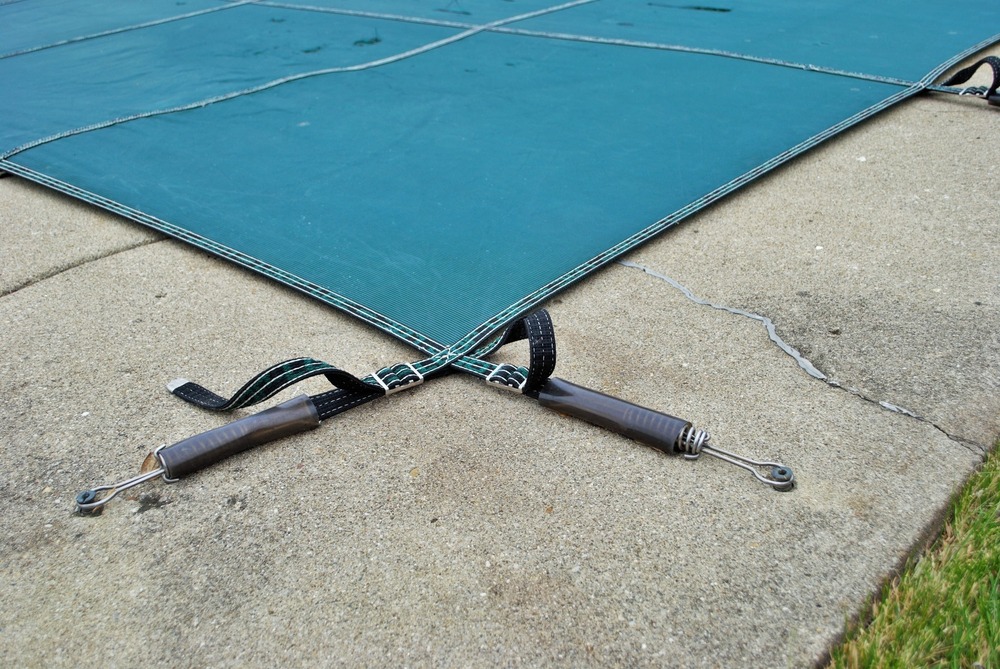
The Standard Pool Cover: Your Shield Against Debris
Think of a standard pool cover as a protective shield. Traditionally made of heavy-duty vinyl or polypropylene mesh, a standard cover’s primary job is security and debris prevention.
Standard covers are tightly anchored around the perimeter of your pool using straps, springs, or heavy water bags. They are designed to withstand heavy weather, keep out autumn leaves, and - most importantly - prevent accidental hazards such as children or pets falling into the pool. As such, you can also get specialised safety pool covers, designed to be sturdier and help prevent any accidents.
Key Characteristics of a Pool Cover:
-
Primary Purpose: Winterisation (read about pools), safety and keeping dirt, leaves and wildlife out of the water.
-
The Material: Heavy, often opaque and structural.
-
The Downside: They are bulky, difficult to take on and off daily, and do very little to heat your water. In fact, solid winter covers block out the sun entirely, allowing no additional heat to penetrate the cover to the water beneath.
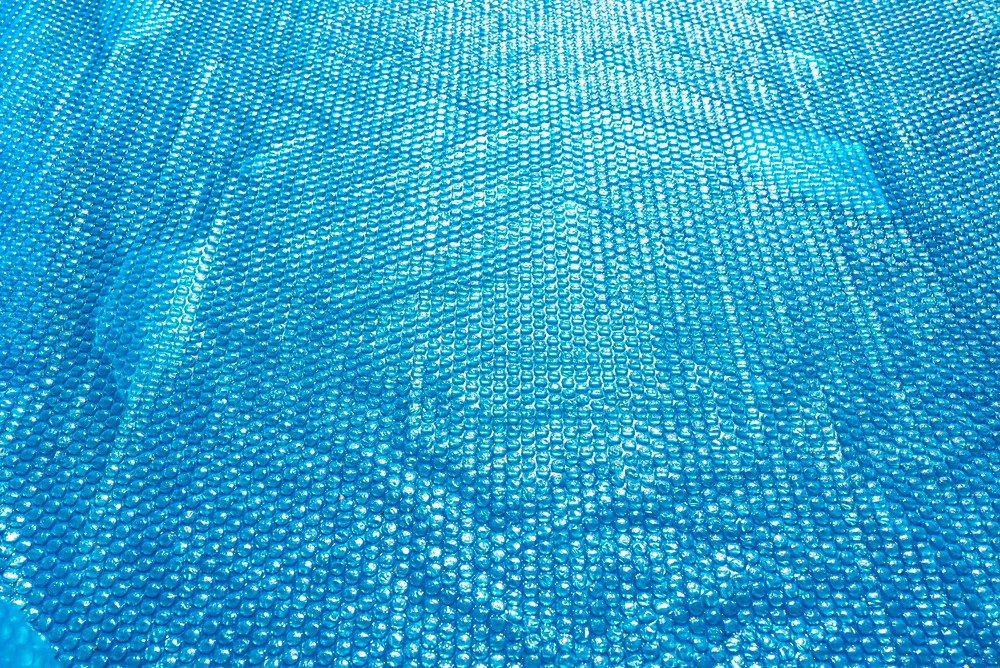
The Pool Blanket: Your Thermal Energy Grid
A pool blanket (often called a solar cell pool blanket or poolver) is entirely different. It doesn't anchor to the deck, and it isn't designed to support weight. Instead, it is a lightweight, specialised sheet of UV-stabilised plastic covered in thousands of tiny, engineered air bubbles (either circular or honeycomb shaped) that floats directly on top of the water's surface.
Rather than acting as a structural shield, a pool blanket functions like a magnifying glass and a thermos combined.
During the day, the transparent solar cells absorb the sun’s thermal energy and pass that heat directly into the water below. At night, those same air bubbles act as an insulation barrier, locking that heat in and stopping evaporation - the number one cause of pool heat loss - by up to 95%.
Key Characteristics of a Pool Blanket:
-
Primary Purpose: Heat retention, warming the water and preventing evaporation.
-
The Material: Lightweight, bubble-wrapped texture designed to float seamlessly inside the pool perimeter.
-
The Downside: It will not prevent debris from slipping past the edges during a storm, and it is not a safety cover.
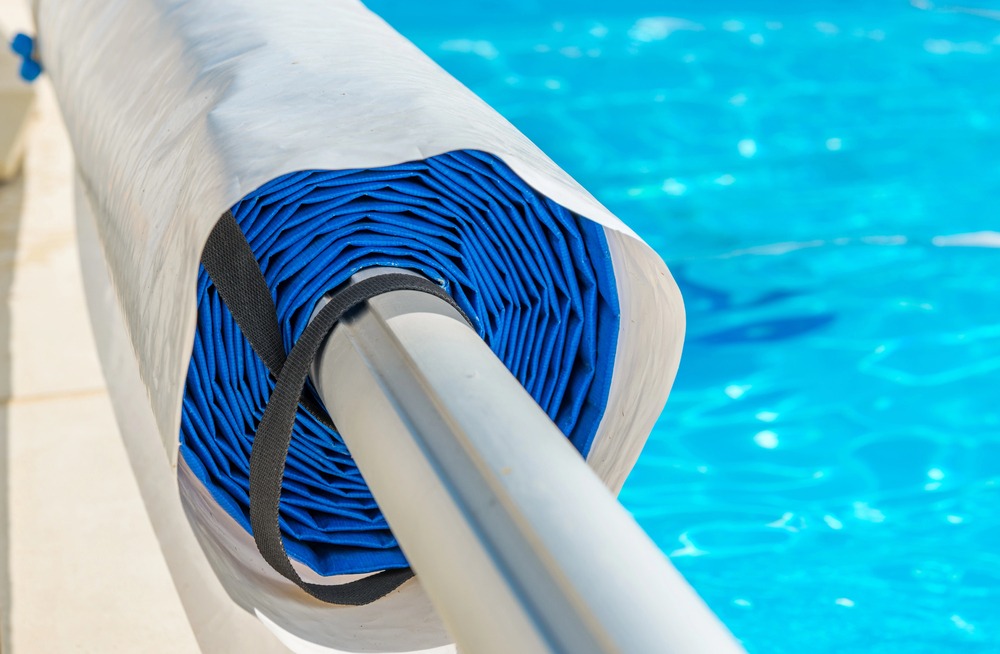
Solar Cell Pool Blanket Rollers and Storage
Because a solar cell pool blanket needs to be taken off every single time you want to swim and put back on the moment you step out, convenience is everything. If a blanket is a hassle to move, you won't use it.
That is where a swimming pool cover and roller system becomes essential.
Instead of dragging a wet, heavy sheet of plastic across your coping (the side of the pool)- which damages the solar cells over time - a pool blanket roller allows a single person to neatly roll the blanket up in under sixty seconds.
However, many pool owners make a critical mistake: they leave their rolled-up pool blanket sitting directly in the hot midday sun. When the blanket is rolled around the metal axle, the sun’s rays magnify through the layers of plastic, heating the internal air bubbles - sometimes they can pop or fuse together.
To prevent your investment from deteriorating prematurely, always protect your system with a specialised pool cover roller cover when it’s rolled up. This simple, reflective over-cover shields the plastic from UV degradation and adds years to your blanket’s lifespan.
When do you need a pool cover and when do you need a pool blanket?
Choose a Standard Pool Cover if: You are closing your pool down for the winter, need a certified safety barrier for kids and pets, or live in an area with heavy, constant debris fall.
Choose a Pool Blanket if: You want to extend your swimming season, raise your pool’s temperature naturally by several degrees, and slash your water evaporation and chemical top-up bills.
For the ultimate back garden setup, most 1st Direct customers actually use both: a sleek pool blanket on a roller for daily use throughout the spring and summer, and a heavy-duty safety cover to button down the pool when the swim season officially ends.
Still unsure which size or style fits your specific layout? Reach out to the team at 1st Direct today, and we’ll help you configure the perfect cover and roller system for your pool.
Alternatively, use our winter pool cover calculator and solar cover calculators for easy sizing.