
Understanding Pool Photometers
When it comes to looking after your swimming pool or hot tub, clear water is about more than just appearances: it's down to real science.
Whether you are a commercial pool operator managing multiple leisure sites, or a home pool owner wanting a pristine swim, getting your water balance spot-on is the single most important part of your maintenance routine.
Take a look at our guide to understanding pool photometers to best understand what you need and why.
Find the Perfect Photometer for Your Pool
Guide
What is the purpose of a photometer?
What are the three types of photometer?
What are the limitations of using a photometer?
What is a photometer also called?
What is a photometer used to detect?
How accurate are photometer readings?
Find the Perfect Photometer for Your Pool
What is the purpose of a photometer?
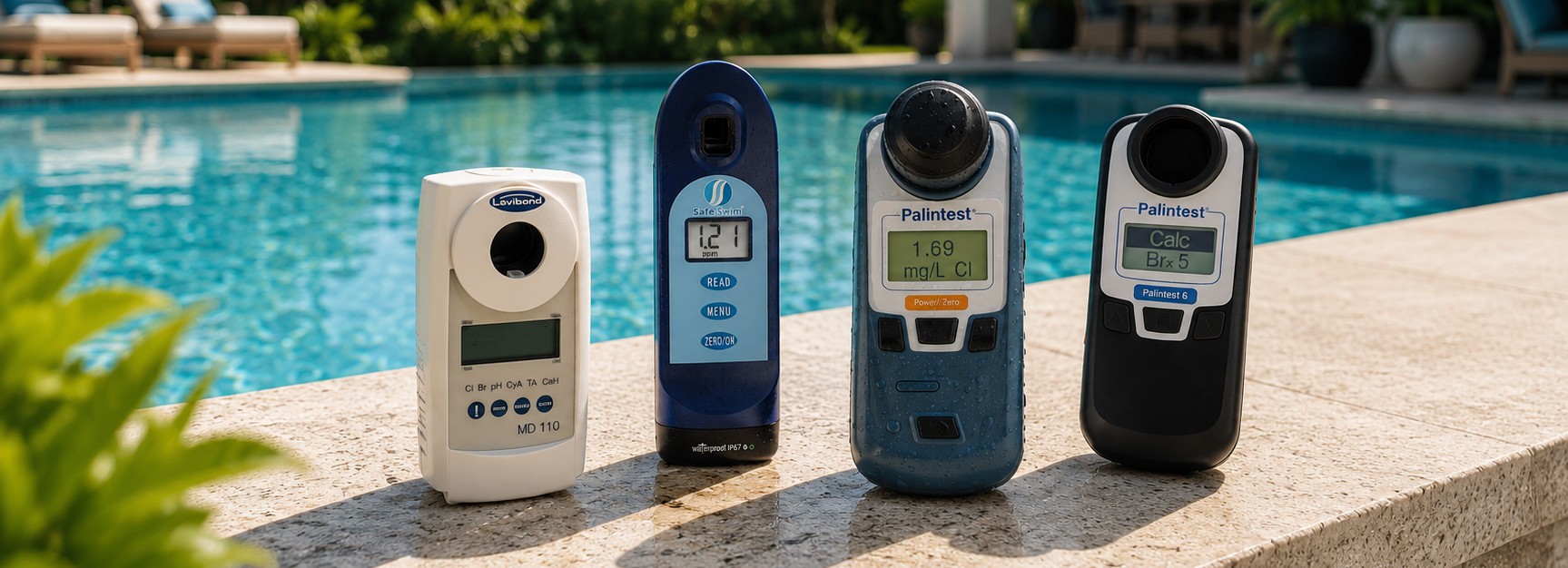
A water photometer is a digital device used to measure the concentration of chemicals in your pool by analysing colour intensity.
Instead of leaving you to squint at traditional manual kits, a photometer provides an exact, objective digital reading of critical parameters like chlorine, pH, alkalinity and stabiliser levels.
Its main job is to give you lab-quality accuracy right at the water's edge, entirely removing human error and keeping your water safe for swimming.
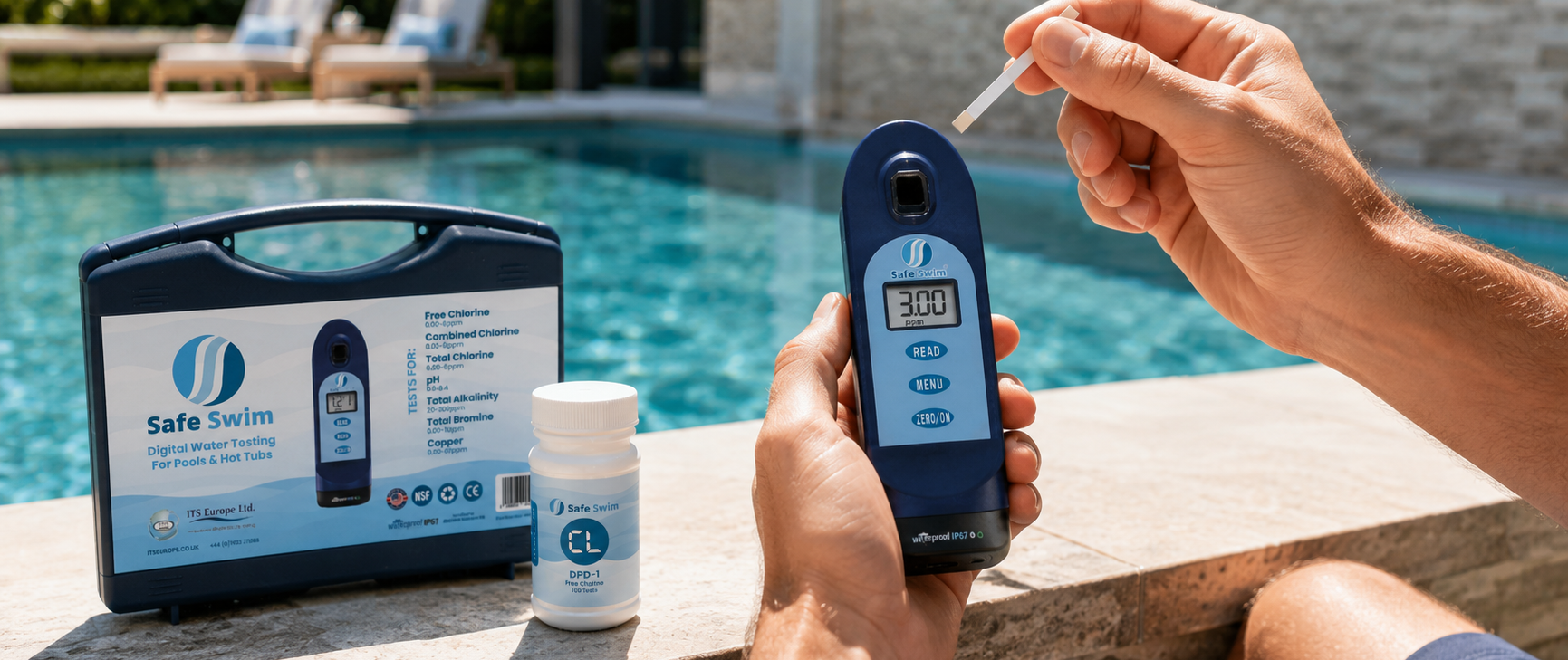
Options like the Safe Swim Photometer and eXact Micro 20 Photometer provide easy and accurate at-home and commercial testing.
Why is photometry important?
Keeping your water perfectly balanced protects both your swimmers and your pool equipment. Poorly balanced water can cause skin or eye irritation, allow bacteria to survive, and quickly ruin expensive components like heaters or pumps.
Getting accurate digital readings means you can make precise adjustments, saving money on chemicals and giving you total confidence that your pool is safe to enjoy.
What are the three types of photometer?
While you'll mostly come across the first type when looking after a swimming pool, photometers generally fall into three technical categories:
-
Transmission / Absorption Photometers: These pass a controlled beam of light straight through your liquid water sample. The amount of light absorbed by the sample tells the device exactly how much of a specific chemical is present. This is the standard tech used in pool water testing.
-
Reflectance Photometers: Rather than shining through water, these measure the light reflecting off a solid surface or a specialised chemical reagent strip.
-
Emission / Flame Photometers: These excite atoms in a sample using intense heat or a flame, measuring the light emitted at specific wavelengths to track down exact elemental concentrations.
What are the benefits of using a photometer?
Upgrading from basic manual testing methods to a digital pool photometer brings some massive advantages:
-
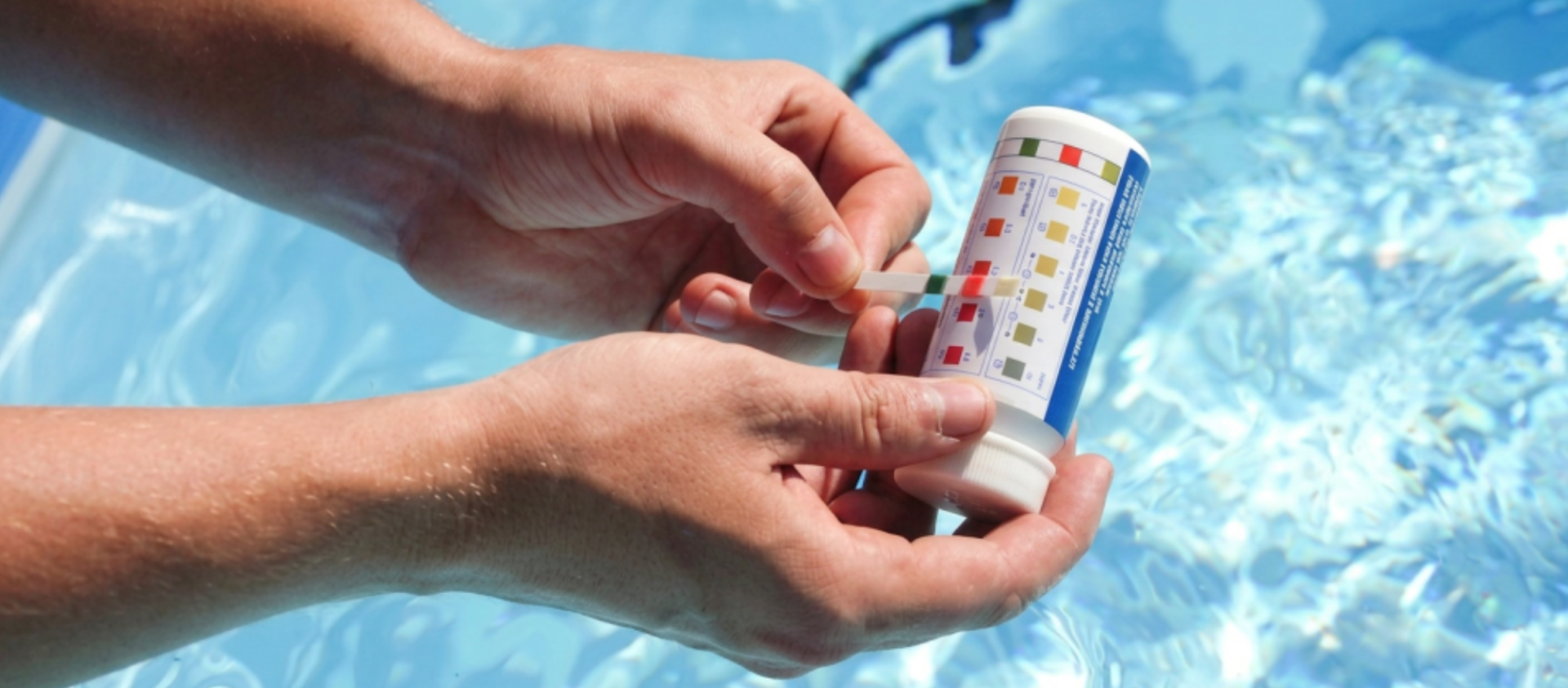
No More Colour Matching Guesswork: Standard test strips force you to match a shade of pink or yellow against a grid on the side of a bottle - which changes depending on the lighting or your eyesight! A digital photometer removes the mistakes and prints a clear number on the screen. Perfect for those that are colour blind.
-
Consistent, Reliable Readings: You get high-precision, professional-grade accuracy every single time, which is essential for busy commercial pools, service engineers, and domestic pool owners alike.
-
Multi-Parameter Power: A modern photometer can run dozens of different chemical tests using the very same handheld light chamber, simply by using the correct reagent or test profile.
How do you use a photometer?
While different models vary slightly, the everyday testing steps are very straightforward:
-
Rinse and Fill: Rinse out your testing cell (cuvette) with your pool water to clear out any residue, then fill it up to the line.
-
Zero the Meter: Pop the sample into the testing chamber and press 'Zero'. This calibrates the device to your water's natural tint or cloudiness before any testing happens.
-
Add the Reagent: Put in your specific parameter tablet, powder, or liquid to trigger the chemical colour reaction.
-
Mix and Read: Mix thoroughly to dissolve the reagent, select your parameter, and press the button to get your digital reading within seconds.
What are the limitations of using a photometer?
Photometers are fairly sturdy, waterproof handheld devices, but they are still precision tools that need to be treated with care:
-
Smudges and Scratches: Fingerprints, water droplets, or fine scratches on the glass testing cell can scatter the light beam, throwing off the internal sensor and causing inaccurate results.
-
Expired Reagents: Your testing is only as good as the chemicals you use. Outdated, damp, or poorly stored tablets won't create the proper colour intensity, skewing your data.
-
Over-Saturation: If your pool chlorine or chemical levels are exceptionally high (clipping the upper limits of the device), the water might become too dark for the light to accurately pass through.
How does photometry work?
-
The photometer fires a targeted beam of light at a specific wavelength through your pool water sample.
-
When you dissolve a testing reagent into the water, it reacts with the target chemical to change the water's colour.
-
As the light passes through, the coloured water absorbs some of that light energy.
-
A sensitive electronic detector on the other side catches whatever light makes it through, and the microchip instantly translates that into an accurate ppm (parts per million) reading.
What is a photometer also called?
Depending on who you are talking to, you might hear a pool photometer called a colorimeter, a spectrophotometer (if it uses a full continuous spectrum of light), or just a digital water analyzer.
What is a photometer used to detect?
Depending on the model you choose, a pool photometer can track a wide range of essential parameters to keep your water in top condition, including:
-
Free, Combined, and Total Chlorine
-
pH and Total Alkalinity
-
Calcium Hardness (key for avoiding scale build-up or surface erosion)
-
Cyanuric Acid (your chlorine stabiliser)
-
Advanced metrics like Copper, Iron, Bromine and Phosphates
How accurate are photometer readings?
In short: incredibly accurate. While basic test strips give you a rough ballpark, professional-tier pool photometers can pinpoint key levels like free chlorine down to a sharp resolution. This precise accuracy keeps you completely in control of your pool chemistry.
Find the Perfect Photometer for Your Pool
The type of photometer you need depends on the scale:
-
For Effortless Home Pool & Hot Tub Testing: If you are ready to say goodbye to colour-matching guesswork and want fast, laboratory-grade measurements at home, the Safe Swim Photometer is ready to go straight out of the box with zero calibration needed.
-
For Advanced Professional & Commercial Care: If you are a pool builder, service engineer or commercial pool operator looking to log historical data and manage up to 20 different chemical parameters via Bluetooth directly on your smartphone, the eXact Micro 20 Photometer is the ultimate pro-level solution.
If you need any extra help picking out the perfect tester for your setup, our friendly technical team at 1st Direct Pools is always here to help you swim with confidence all season long! Contact us about your photometer needs.